
San Juan Previous Residents by Record Era
Previous residents of a San Juan address are best traced in layers. The current Hidalgo County Appraisal District parcel gives a present-day starting point. The county deed chain can then move backward through owners and legal descriptions. Dated directories, released census schedules, Sanborn maps, permits, probate minutes, and obituaries can help identify past residents or explain a gap. None of these sources is a complete list of every person who lived at a house, and the online county index does not state how far back its searchable coverage reaches.
The coverage below is deliberately uneven because the documented sources are uneven. Hidalgo’s recorded land and county material reaches into the 1850s on TSLAC-listed microfilm, while exact local San Juan directory runs have not been published. Use a source for the period it actually covers, then carry the address forward or back with a name, lot and block, or legal description rather than forcing a modern street address into an older record.
| Historical source | Years it reaches | Where to use it | What it can show |
|---|---|---|---|
| County deed direct and reverse records | 1852-1888; supplement to 1912; portal cutoff not stated | County Clerk and UTRGV microfilm | Transfers, parties, liens, plats, and legal descriptions |
| Hidalgo tax rolls | 1852-1910 | UTRGV microfilm through TSLAC | Taxable owner and property continuity clues |
| Probate minutes | 1852-1911 | UTRGV microfilm and County Clerk | Heirs, administrators, estate matters, and names |
| Sanborn maps | San Juan, 1925-1938 | Historical guide and Library of Congress tools | Buildings, streets, uses, and block development |
| Federal census | Released through 1950 | NARA, Census, FamilySearch, or library services | Household composition and address geography |
| City or reverse directories | Exact San Juan run not confirmed | Library, UTRGV, TSLAC, WorldCat, Portal | Dated address and household leads if a volume is found |
For a recent transfer, begin with the parcel and deed. For an older house history, begin with the legal description, map era, and early deed books. For a family question, pair a dated directory or census entry with deeds and probate instead of treating an owner as proof of every household member.
San Juan Parcels Start a Backward Trail
The HCAD property portal is the practical first step for a San Juan address. Its public portal supports owner-name, address, and account searching. Record the parcel owner, account number, situs address, mailing address, legal description, value and exemption details, and property characteristics where they appear. Situs means the physical location of the taxable parcel. A mailing address is where tax correspondence goes. The two can differ, so the mailing address is not evidence that an owner lived at the San Juan house.
Use the San Juan GIS map to check city limits, zoning, property information, utility or permit jurisdiction, and the county precinct context outside city boundaries. The official material did not confirm an address-history layer, a buffer control, or a particular popup field, so treat the map as orientation rather than title evidence. Save the subdivision, lot, block, or legal description that connects the parcel to the County Clerk records. A plat can bridge the street address to those land terms.
Note: A homestead exemption can be an owner-occupancy clue, but it does not identify every current or past person at the address.
Hidalgo Deeds for Previous Residents
The county’s current online deed index is the first recorded-land route. Its Quick Search allows a grantor or grantee, subdivision, document type, or document number, plus a recorded-date range and index-only or index-and-full-text OCR scope. The portal displayed certification through August 24, 2026, but it did not show an online start year or an image price. A search result is an index lead. Open the available instrument detail, preserve the document number and recorded date, and request a county copy or use older film when the online trail ends.
Begin with the current owner as grantee, the party who received the purchase deed. The seller is the grantor, the party who conveyed it. In the earlier purchase, that seller may appear as a grantee. Repeating that handoff builds a chain of title, meaning the sequence of recorded transfers for the parcel. Old Hidalgo deeds often use lot, block, subdivision, metes-and-bounds, or other legal-description language rather than a modern San Juan street address.
The county’s Official Records Search is the source for this current index workflow.
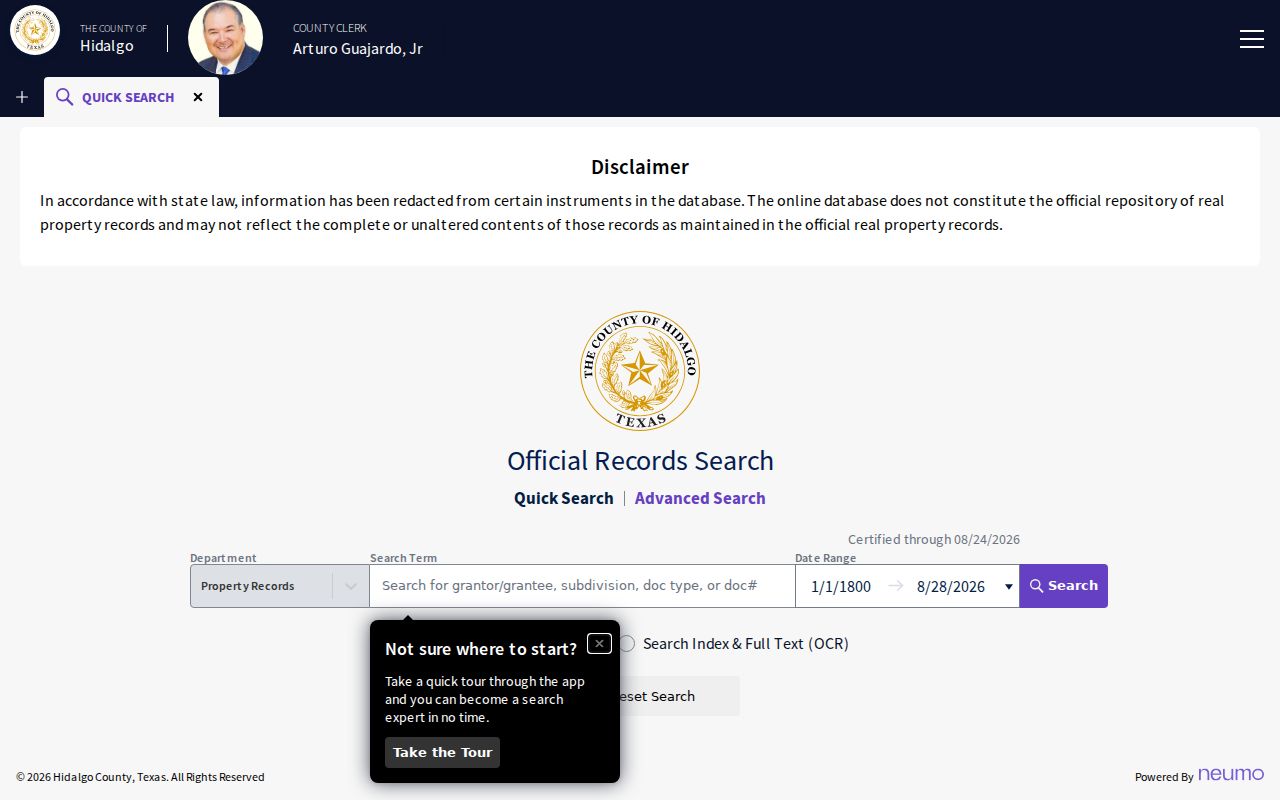
The captured screen shows the term, recorded-date, and index-scope choices that support a careful party-by-party deed search.
- Find the current parcel in HCAD and write down the owner, account, and legal description.
- Search the current owner as a grantee in the Official Records index and locate the purchase instrument.
- Copy the grantor, date, document number, book or page if displayed, and legal description.
- Search that grantor as a prior grantee, limiting the date before the known transfer.
- When the online index stops, continue with County Clerk material and the TSLAC-listed direct or reverse deed books on microfilm.
- Grantor and grantee
- The grantor transfers an interest. The grantee receives it in the recorded instrument.
- Chain of title
- A sequence of recorded transfers that ties a parcel through earlier owners and legal descriptions.
- Legal description
- The land identifier in a deed, such as a subdivision lot and block or metes-and-bounds text. It often outlasts a street-address change.
San Juan Previous Residents on Microfilm
Older land history requires a fallback beyond the live portal. TSLAC’s Hidalgo County guide identifies deed records from 1852-1888 with separate direct and reverse indexes, a deed supplement from 1880-1912, and Spanish-transcribed deeds from 1854-1896. It also lists marriage records, probate minutes, court minutes, surveys and field notes, and tax rolls. UTRGV in Edinburg is the named microfilm access route. The direct and reverse indexes are especially valuable when the street address does not appear in the older instrument.
Spanish and English name forms deserve equal care in Hidalgo County research. Preserve compound surnames, initials, accents, and the index’s name order. A marriage record may supply a spouse’s surname. Probate can connect heirs and administrators. A later deed may move the trail from a deceased owner to an estate representative or next title holder. These details are leads to compare, not a reason to assume two similarly named people are the same person.
The TSLAC microfilm inventory documents the filmed county runs.
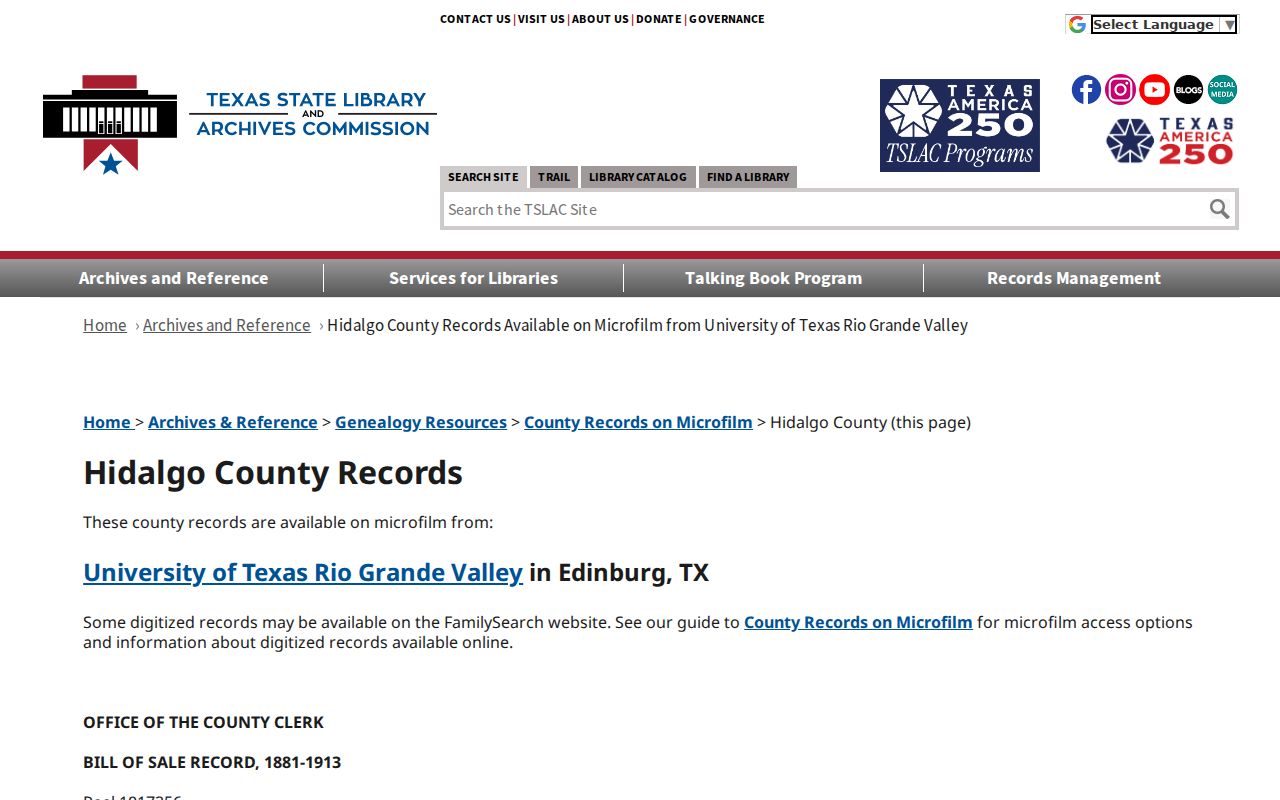
The historical inventory gives a documented path backward when the current web index has no stated cutoff or no matching record.
San Juan Maps Resolve Address Changes
When an older record stops looking like a current address, check geography before changing the search terms. San Juan’s documented Sanborn map coverage is 1925-1938. Those sheets can show building footprints, street names, block development, and whether a structure had a different use. TSLAC map catalog records add San Juan editions for 1961, 1972, 1983, 1988, and 1992. They can connect a subdivision or street reference to the parcel language used in a deed.
No official source inspected for this research confirms a local street-renumbering or renaming year. Do not invent a conversion. Compare an old map, plat, city ordinance if available, Sanborn sheet, and deed legal description. San Juan is close to Pharr, Alamo, McAllen, Edinburg, Hidalgo, and other county communities, so an older item may use a postal city or municipal label that does not match today’s San Juan wording.
Note: Maps can establish location and development context, but they do not identify who lived inside a building.
Past San Juan Households Beyond Ownership
Owners and occupants are not always the same. To identify past residents at a San Juan address, look for a dated city or telephone directory, a reverse or criss-cross section, and the closest released census schedule. Reverse directories are arranged by address when an edition includes them. The exact San Juan directory run is not confirmed, so ask the San Juan Memorial Library, UTRGV, TSLAC, and WorldCat for San Juan, Pharr, or McAllen volumes. The San Juan directory book explains how to assess the collection routes and read an entry.
TSLAC’s city-directory guide outlines the statewide catalog and institutional routes for that inquiry.
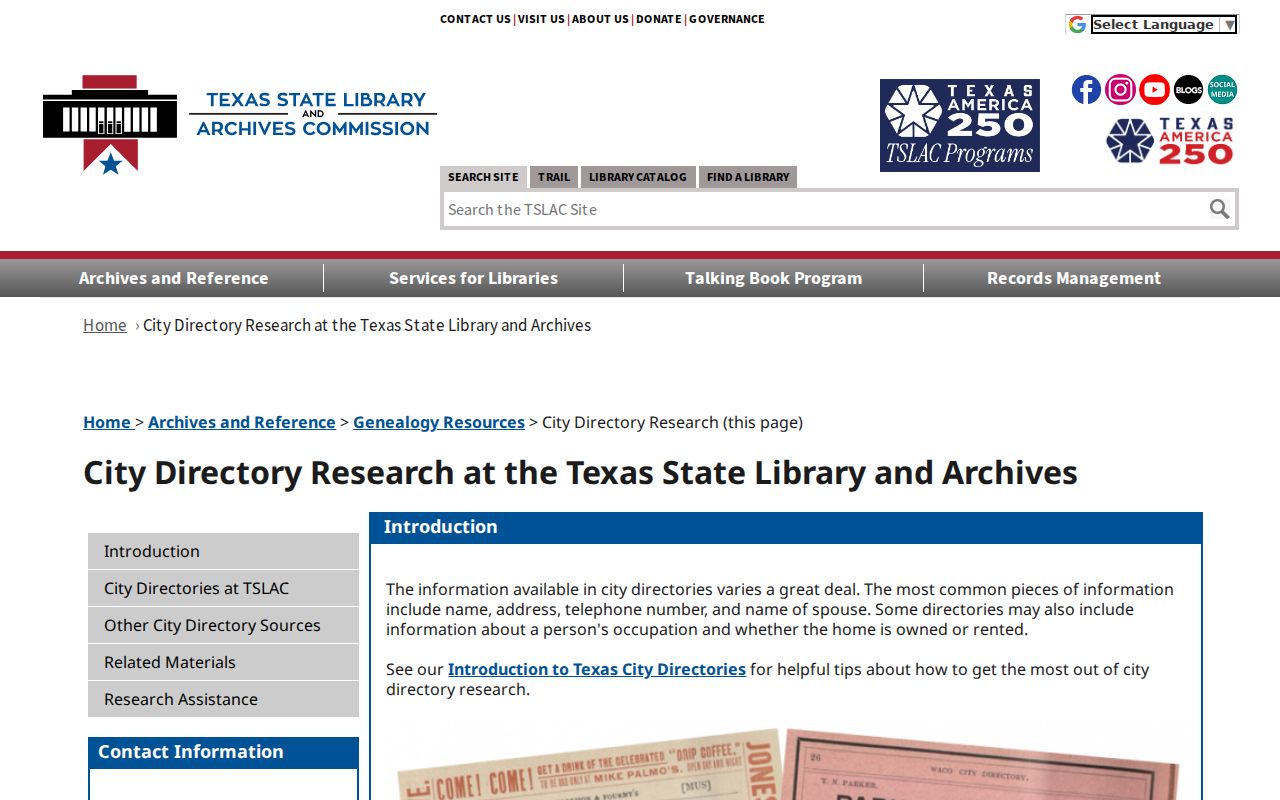
The guide helps move a search from an unconfirmed local shelf to a documented library, archive, or catalog route.
Start with the exact street spelling and nearby city label. Search an alphabetical listing in adjacent years, then an address-ordered section if one exists. Record the edition, title, page, name form, spouse notation, address, and any printed business detail. Pair that date with the closest public census. Census schedules can show people in a household; deeds show transfers; neither alone answers every question about who lived there before.
- Match the address or legal description to the correct map period.
- Locate an available directory or phone-book entry and preserve its full citation.
- Check a reverse or criss-cross listing only if the edition provides one.
- Compare the directory year with the closest released census schedule and the deed dates.
- Use an obituary, cemetery record, probate item, or later deed to test a move, death, or estate transfer.
Lawful use. Use San Juan house-history material for family history, estate questions, civic research, or personal property curiosity. Do not use records to track, threaten, or harass a living person.
San Juan Permit Dates and Probate Endpoints
San Juan Planning and Zoning is an important address-history custodian because the city’s 2024 audit reported 744 building permits issued in that fiscal year. City material describes building, site construction, excavation, occupancy or health, conditional-use, subcontractor, working-clearance, reinspection, subdivision, variance, zoning, and inspection services. Permit or code records can date construction, remodeling, or an inspection. They are not proof that an applicant, contractor, owner, or former resident occupied the property.
No verified public address-keyed San Juan permit-history search was located. For an existing file, use the City Secretary’s Public Information Act process with the address, permit type, and date range. A written request can be sent by email, mail, or in person, and the city’s convenience form is not required. The city may provide a cost estimate when processing is expected to exceed $40. Ask for existing records only, because the city does not have to create a list or answer a research question.
Probate and obituary evidence can close a property trail. Probate minutes may identify heirs, administrators, or an estate connection. An obituary can identify relatives or a date to test against a subsequent transfer. Exact online obituary coverage for San Juan was not located, so corroborate a notice with a county, state vital, cemetery, probate, or original-newspaper source where possible.
San Juan Previous Residents and the 1910 Archive
When the land chain and local library leave a gap, the Museum of South Texas History in Edinburg offers a countywide historical fallback. Its Margaret H. McAllen Memorial Archives preserve regional manuscripts, photographs, maps, civic-history material, and finding-aid leads. The museum was founded in 1967 in the restored 1910 Hidalgo County Jail. The Hidalgo County Historical Commission finding aid names local-city books, San Juan public-library history, maps, and community organizations among useful context sources.
MOSTHistory’s archive page is the source for this regional repository.

Request a collection description, accession number, or published index rather than asking the archive for a general list of past residents.
The San Juan Memorial Library remains the local starting point for a directory, yearbook, phone-book, newspaper, or interlibrary-loan lead.
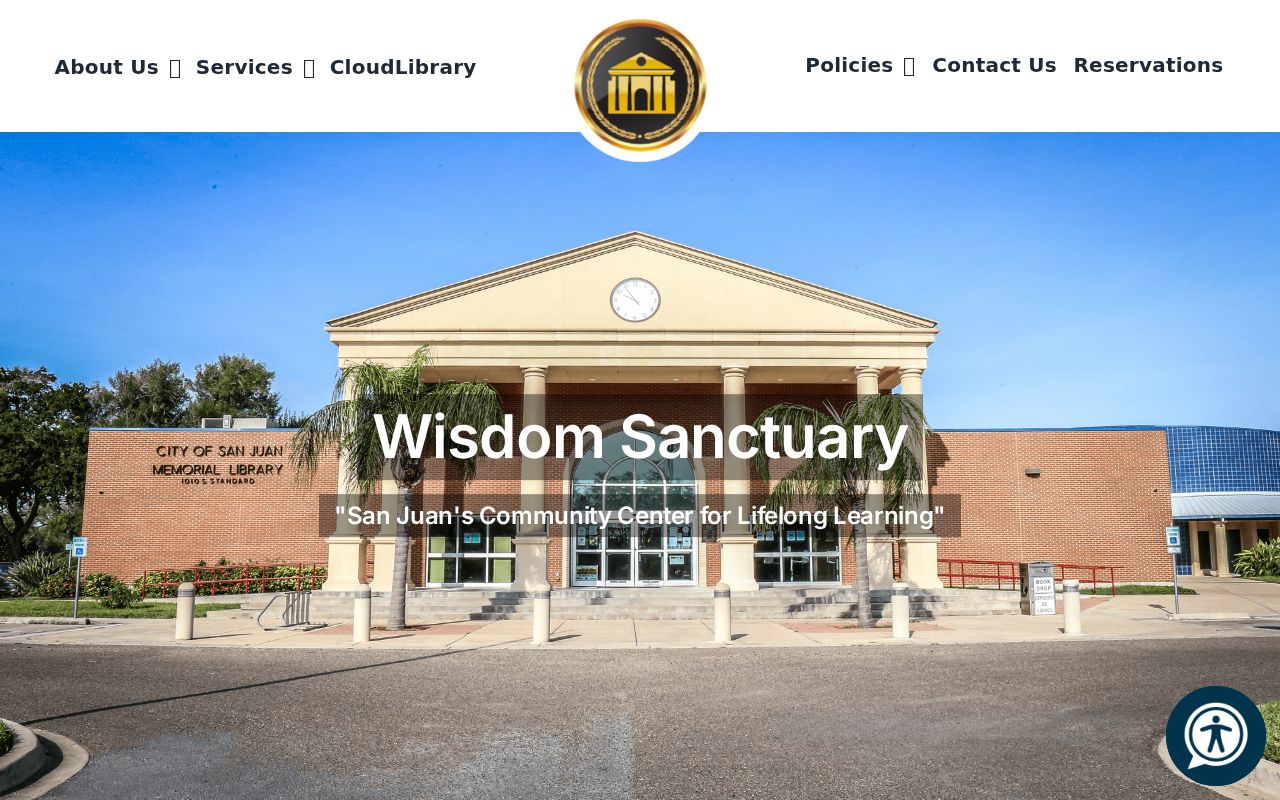
The library adds a local reference channel when a house-history search needs an item that is not available through a county portal.