
San Juan City Directory Collections and Gaps
San Juan city directories have to be approached as a collection search, not as a ready-made local database. The San Juan Memorial Library is the first local stop. Its public information confirms a community library with a catalog, public computers, and reference access, but it does not publish a city-directory year list, reverse-directory run, obituary index, or newspaper-microfilm inventory. Ask the reference desk specifically about San Juan, Pharr, and McAllen telephone books, city directories, yearbooks, cemetery books, and local newspapers. If a volume is not on hand, interlibrary loan can widen the search.
For earlier county context, the Texas State Library and Archives Commission, or TSLAC, identifies a much firmer record base than the printed directory shelf. Its Hidalgo County guide lists deeds, marriage records, probate minutes, court minutes, surveys, and tax rolls on microfilm. Those sources cannot replace a city directory, yet they can test the address, surname, or family connection found in one. The table separates confirmed county collections from directory routes whose local San Juan volume must still be verified.
| Collection route | Years available | Where held | How it helps |
|---|---|---|---|
| Hidalgo deed direct and reverse indexes | 1852-1888; supplement to 1912 | UTRGV microfilm and Hidalgo County Clerk | Tests owners, legal descriptions, and transfer dates |
| Spanish-transcribed deed records | 1854-1896 | UTRGV microfilm through the TSLAC guide | Preserves a separate name and land-record route |
| Hidalgo tax rolls | 1852-1910 | UTRGV microfilm and TSLAC | Shows taxable-owner and property continuity |
| City and telephone directories | Exact San Juan run not published | San Juan Library, UTRGV, TSLAC, WorldCat | Locate and verify an edition before relying on it |
| Sanborn maps | San Juan, 1925-1938 | State historical guide and Library of Congress tools | Checks streets, structures, and development |
Do not fill a missing San Juan year by assuming a nearby city edition covers the same households. The Rio Grande Valley’s close-set communities can appear under different postal or municipal labels. Record the city named on the title page, the publisher, the date, and the page before comparing an entry with other evidence.
San Juan Directory Leads at the Library
San Juan Memorial Library provides the practical local bridge at 1010 S. Standard Street. The published hours are Monday through Thursday from 9 a.m. to 7 p.m., Friday and Saturday from 9 a.m. to 5 p.m., and Sunday from 1 p.m. to 5 p.m. Its catalog and public computers support a careful holdings request, while the reference desk can help identify what is local, borrowed, or better pursued at a regional institution. The public pages do not confirm a dedicated genealogy database or a particular city-directory shelf, so ask for a collection-level answer rather than a surname-only search.
The library is also a sensible place to ask for the companion sources that make a directory entry useful: older phone books, Valley yearbooks, newspaper leads, cemetery books, and local-history referrals. A library staff member may be able to direct a reader to UTRGV, TSLAC, or an interlibrary-loan record when the requested volume is elsewhere. That sequence preserves the uncertainty honestly while still giving an actionable next step.
The library’s public reference page is the source for this local access point.

The captured library page supports a visit or reference inquiry, not a claim that a particular San Juan city directory volume is already available online.
Note: Give the desk an address spelling, an approximate year, and nearby city names so staff can check catalog records more precisely.
San Juan City Directory Digital Routes
TSLAC’s city-directory research guide sets out the statewide online and library-based paths. The Portal to Texas History, hosted by UNT, can be searched or narrowed by county and time period. Participating libraries may offer HeritageQuest through TexShare, while Ancestry Library Edition and HeritageQuest are available on-site at TSLAC for its U.S. City Directories collection. WorldCat remains useful for finding city and telephone directories held by libraries elsewhere.
These are search routes, not proof of a San Juan run. The inspected Portal collection reports city, business, legal, and telephone directories with indexed names, addresses, and phone numbers, but its visible location facet did not show Hidalgo County. Confirm a result by its title, publisher, city, date, and scan before copying an address into a family timeline. A directory from a nearby Valley city may still be a worthwhile lead, but it should be described by its actual coverage.
TSLAC’s guide brings the statewide options together.
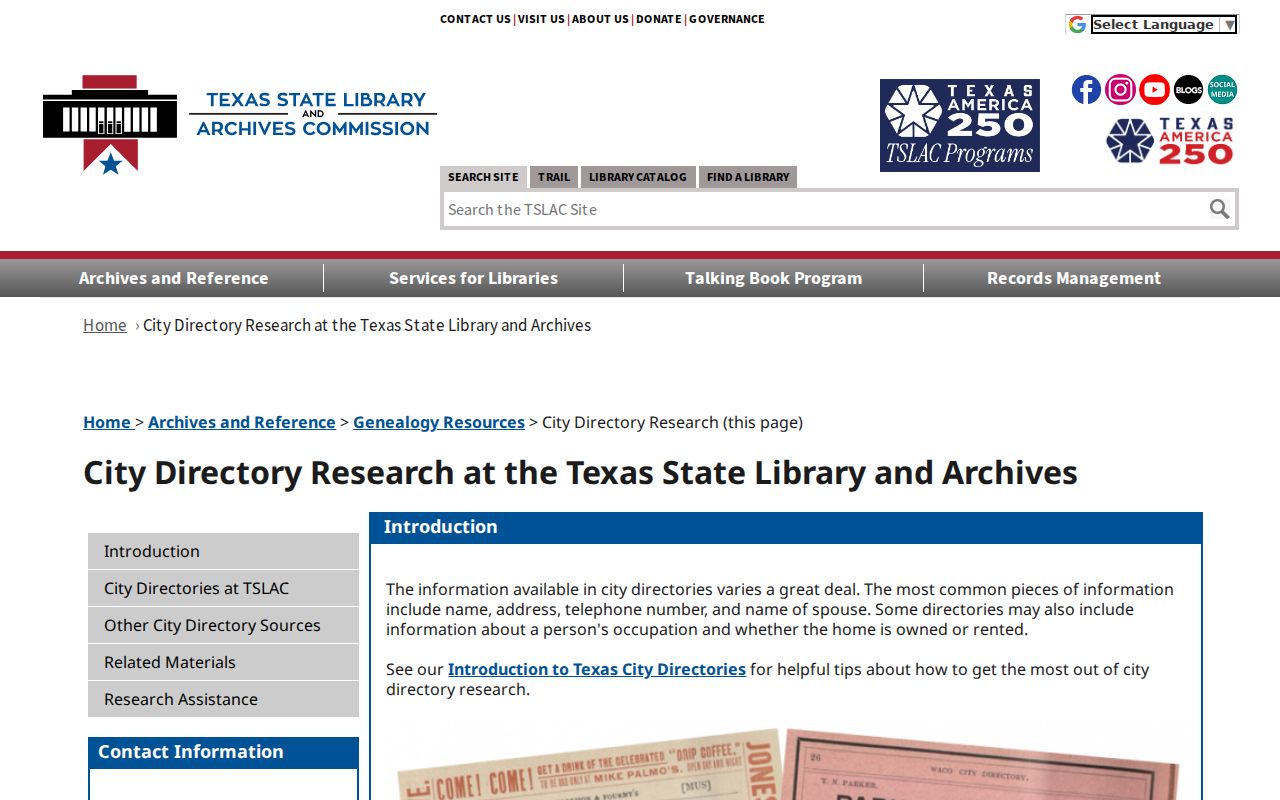
The guide is most useful when a local shelf is unlisted because it points from a local inquiry to catalog, archive, and institutional database options.
Portal to Texas History’s City Directories collection provides the digitized browse route.
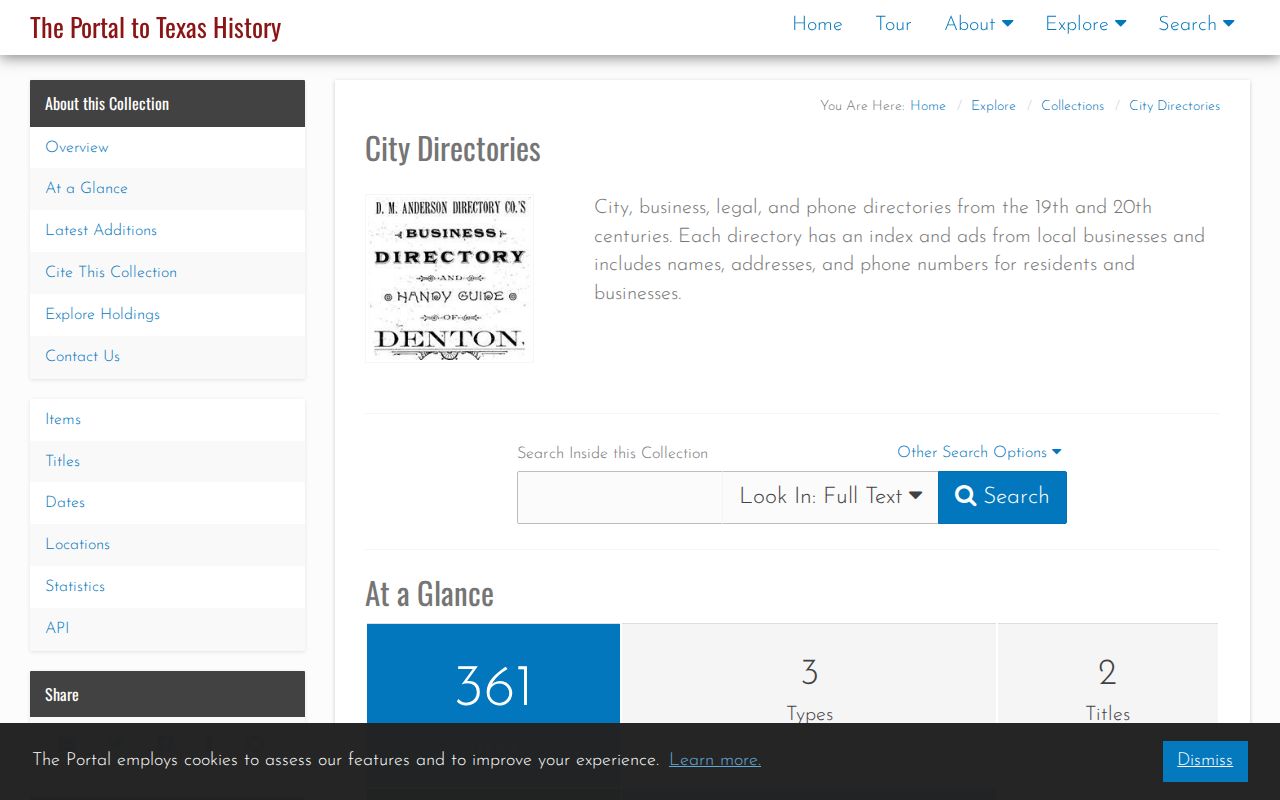
Use the collection filters to discover possible volumes, then verify the place and edition on the scan itself.
Hidalgo Microfilm Behind San Juan Directories
When a printed volume cannot be located, the historical trail does not end. TSLAC’s Hidalgo County microfilm guide places deed records from 1852-1888, a deed supplement through 1912, and Spanish-transcribed deeds from 1854-1896 at the center of older research. It also identifies marriage records from 1852-1888, probate minutes from 1852-1911, county court minutes from 1876-1915, district minutes from 1853-1912, surveys and field notes from 1881-1941, and tax rolls from 1852-1910.
UTRGV in Edinburg is the named access point for this microfilm. Direct and reverse deed indexes are especially useful for a property question because they let a researcher move between parties and an instrument trail. They do not prove that every person named in a directory lived at a house, but they can distinguish a dated directory presence from an ownership record, a marriage connection, or a probate matter.
The Hidalgo County guide documents the older film runs.
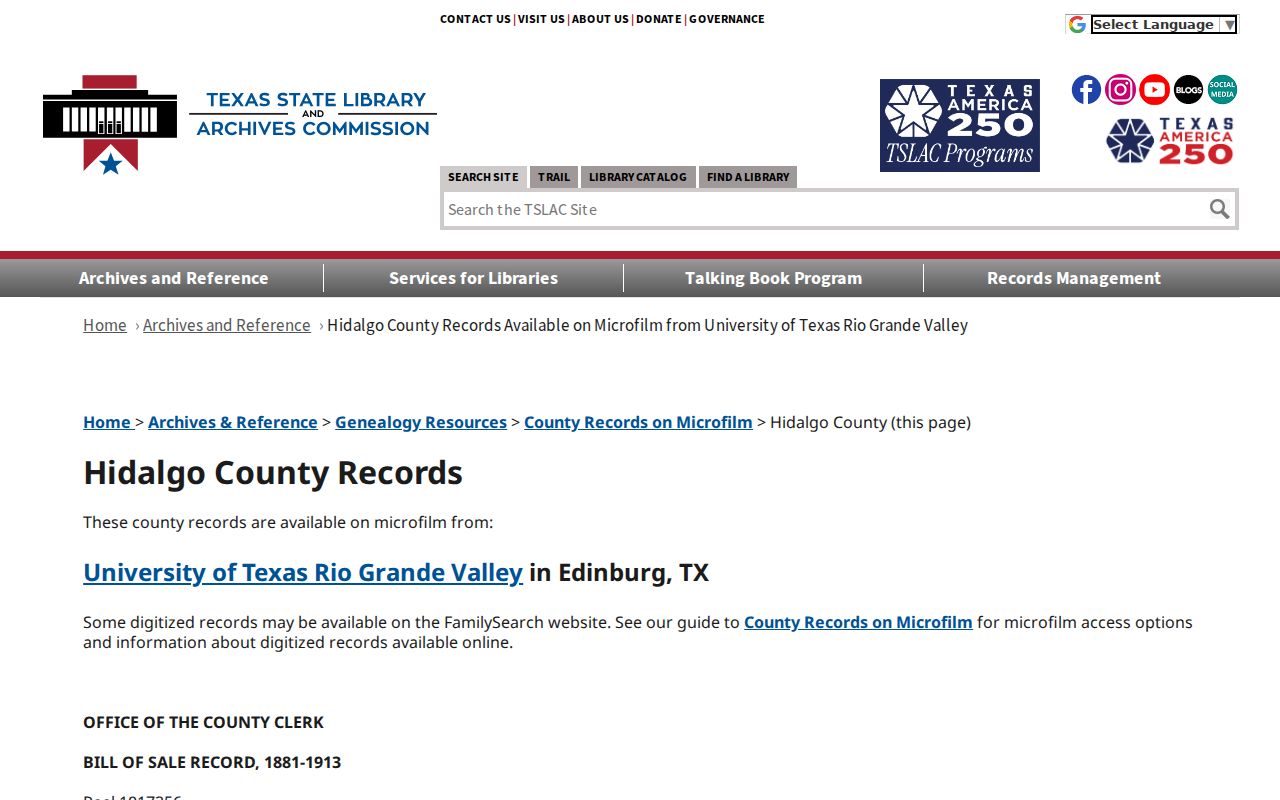
The listed film provides a recorded-history fallback when an online search or local directory inquiry stops short.
How San Juan City Directory Entries Read
No scanned San Juan directory entry was available in the inspected sources, so an entry’s exact abbreviations and owner marks must be checked in the volume itself. City and telephone directory guides indicate the kinds of details that may appear: the printed name, spouse notation, occupation or business, street address, telephone number, and sometimes a classification or reverse-address section. Photograph or transcribe the title page and abbreviation key with the entry. Those details identify the edition and prevent a shorthand mark from being mistaken for a fact.
A directory is a snapshot of what the publisher printed, not a title record or a complete household list. A person can be absent because the edition did not cover that community, used another city label, omitted a household, or recorded a different spelling. Compare the printed address against an older map and the land trail before concluding that two similar names identify the same person.
| Name as printed | Preserve surname order, initials, accents, and any nickname or spouse notation. |
|---|---|
| Street and number | Record it exactly, including apartment or room detail where shown. |
| Work or business line | Use it as a distinguishing clue only when the edition actually prints one. |
| Edition facts | Note title, city, publisher, year, page, and any abbreviation key. |
| Reverse section | Check whether the volume has an address-ordered companion listing. |
- Criss-cross directory
- An address-ordered directory section that can connect a house number to a dated listing when that edition includes it.
- Householder index
- A list organized around named householders, which may omit other people at the address.
- Abbreviation key
- The publisher’s explanation of shorthand. Read it before interpreting initials, relationship notes, or address labels.
San Juan Maps Support Directory Clues
San Juan’s 1925-1938 Sanborn map window provides a physical check on a city-directory address. The state historical guide identifies those years, and the Library of Congress Sanborn research guide explains how to search by state, city, edition date, sheet, notes, and available digital files. Sanborn sheets can show a building footprint, street name, use, and neighborhood development. They do not name household occupants, so they work best beside a dated directory or deed, not in place of one.
TSLAC’s San Juan map catalog also lists records for 1961, 1972, 1983, 1988, and 1992. Those editions can help when a directory uses a city, county-subdivision, or postal label that differs from the modern San Juan label. A 1961 county map includes a San Juan subdivision inset and local features such as post offices, cemeteries, railroads, canals, utilities, and settlements. Map evidence is particularly useful for matching a historical street reference to today’s parcel.
Note: No verified San Juan street-renumbering year was located, so use maps, plats, and legal descriptions rather than guessing at an address conversion.
Trace San Juan City Directories by Household
Use San Juan city directories as a dated household layer. Start by establishing the street spelling and the likely city label for the period. Search adjacent editions when they exist, then check an address-ordered section for the same house. Preserve each spelling, spouse notation, occupation line, house number, and edition citation. For a current address-based comparison, use the San Juan street directory rather than treating a historical entry as current evidence.
- Locate the earliest reliable name or address entry and copy the edition details.
- Search nearby years and nearby Valley city labels for moves, variants, or a spouse entry.
- Check a criss-cross or reverse section when the edition provides one.
- Pair the directory date with the closest released federal census schedule, which is public through 1950 under the 72-year rule.
- Test ownership with the deed chain and use probate, obituary, or marriage material only as supporting evidence.
Census schedules can show a household composition that a city directory leaves out. Deeds show transfers, not every resident. Probate minutes can identify heirs and administrators, while a newspaper notice may bridge a move or death. The strongest conclusion comes from several dated records that agree, not from one abbreviated directory line.
San Juan History at the 1910 Jail Archive
The Museum of South Texas History in Edinburg adds an archival route for San Juan family, civic, church, military, business, and neighborhood questions. Its Margaret H. McAllen Memorial Archives preserves regional manuscripts, photographs, maps, and civic-history material. The museum began in 1967 in the restored 1910 Hidalgo County Jail, then grew into a regional institution. The Hidalgo County Historical Commission finding aid also points toward San Juan public-library history, local city books, maps, and organizations.
Ask for a collection description, finding aid, accession number, or published index. That is more precise than asking staff to create a person-by-person list, and it respects collections that may have restricted personal material. MOSTHistory can provide context or a lead; an archive item still needs its own citation and should be checked against the directory, map, or county record it relates to.
MOSTHistory’s archive information identifies this regional historical repository.

The archive is a context source for San Juan history, not evidence of a confirmed local city-directory volume.